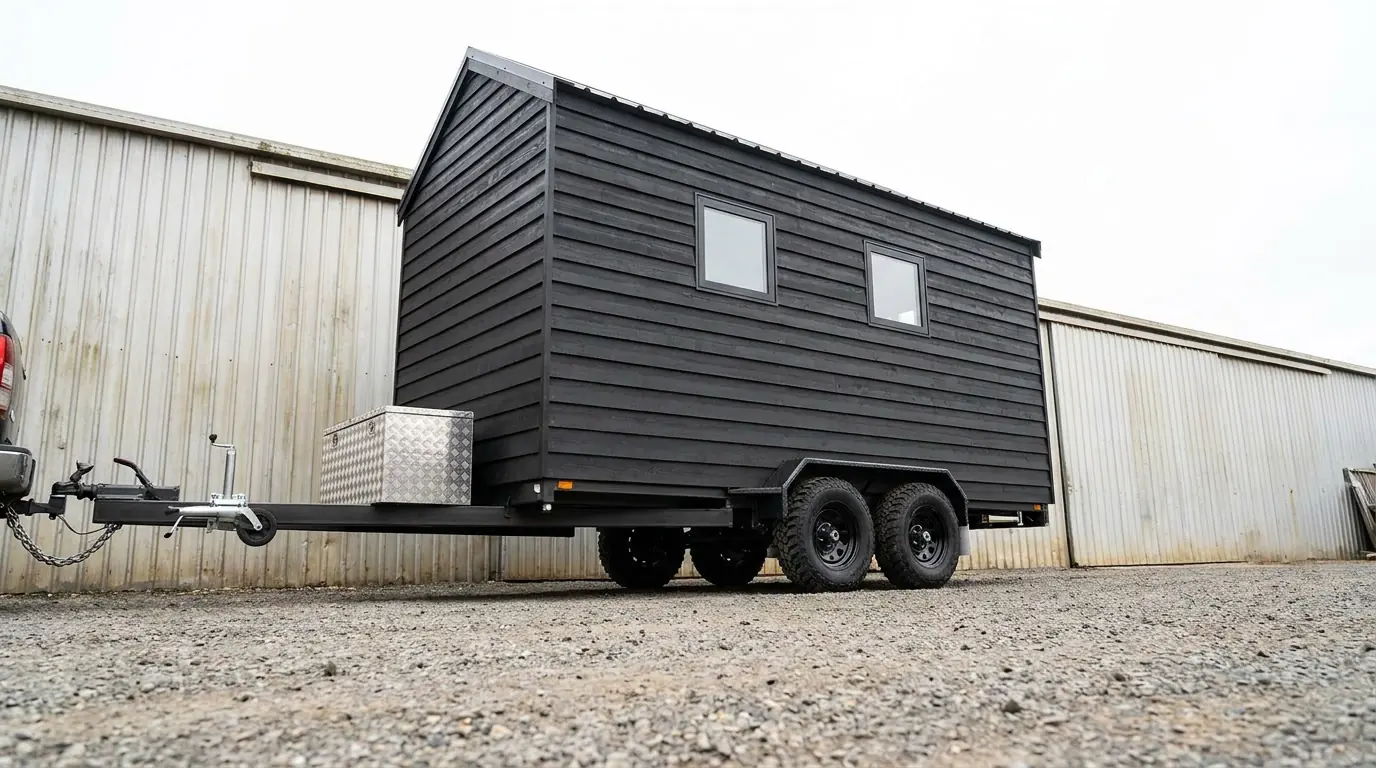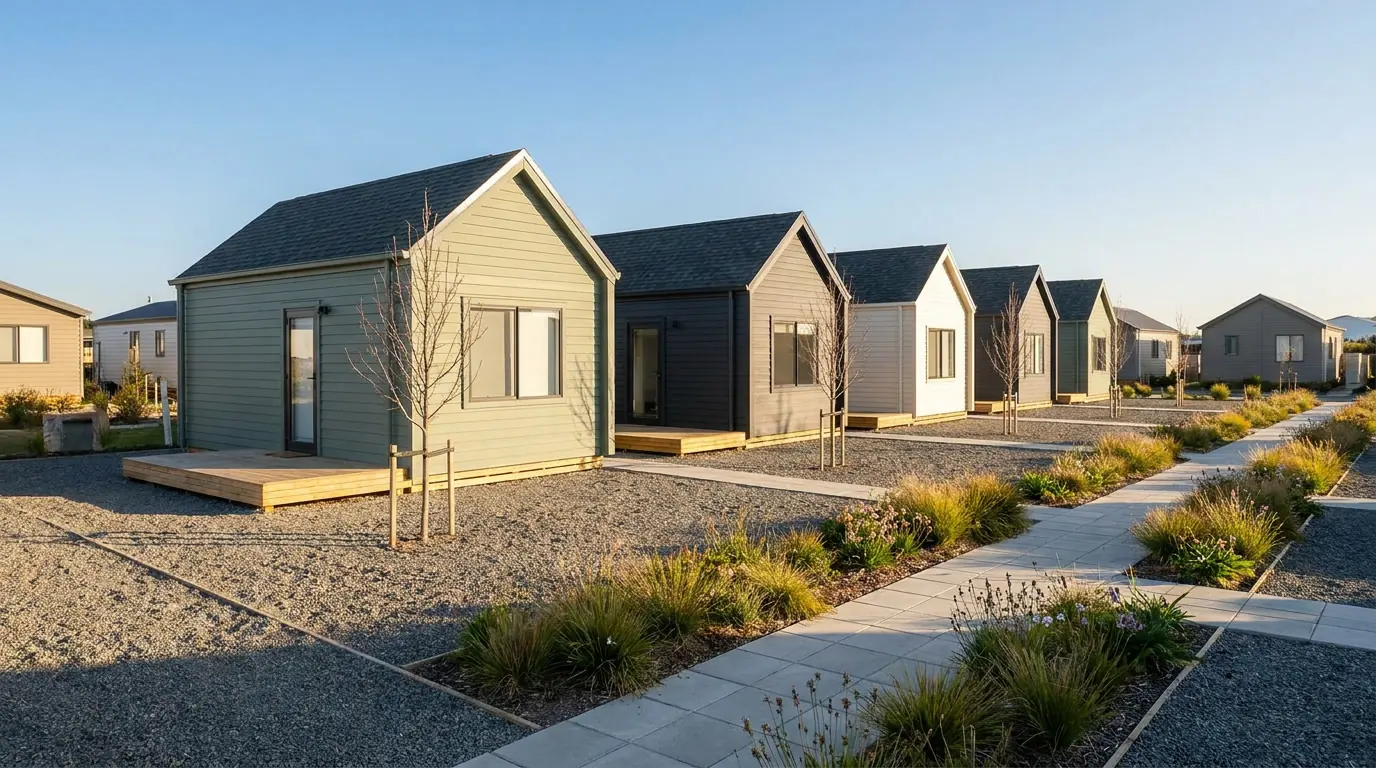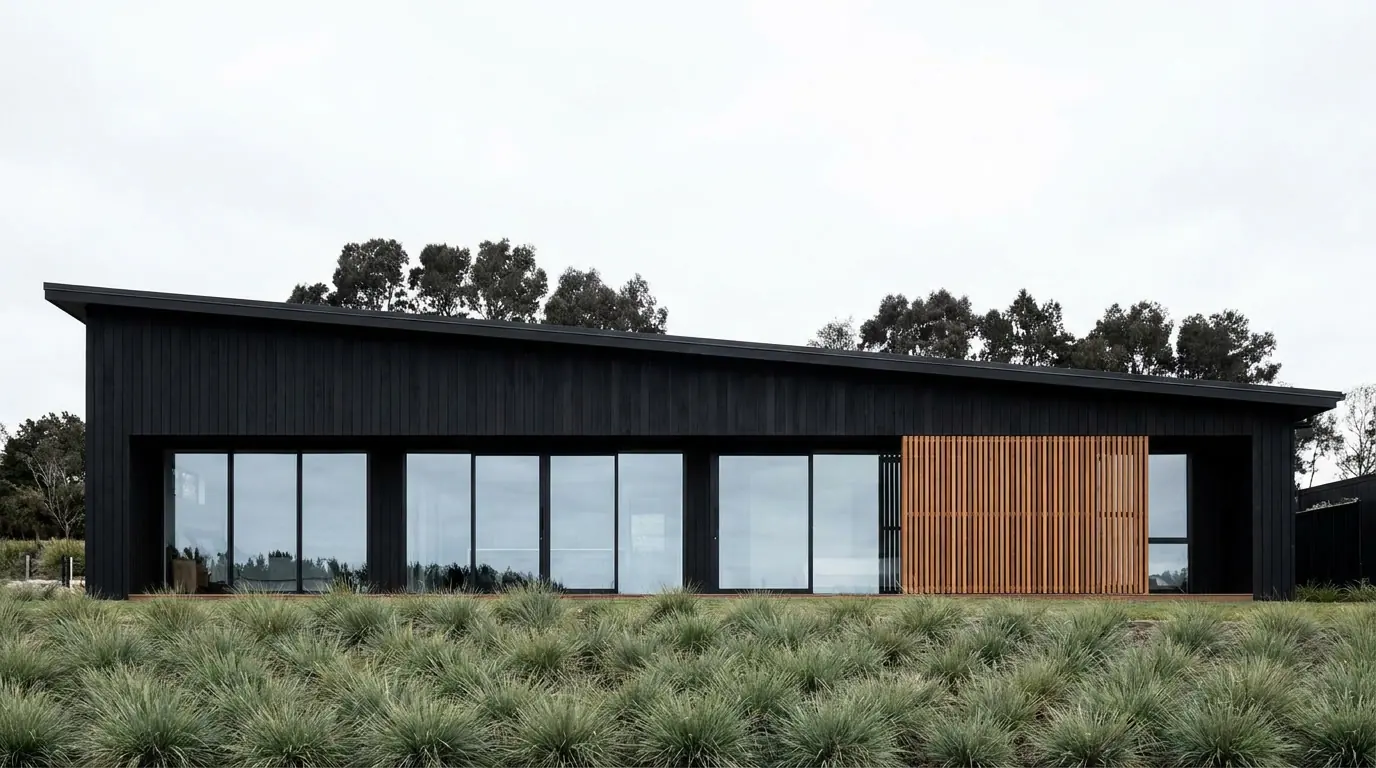
TL;DR: Yes, black walls get up to 54°F hotter at the surface — but with decent insulation, only about 5–20% shows up on your cooling bill. Quality black paint holds colour surprisingly well; cheap black chalks out in three years. Best materials: fiber cement, metal or charred wood. Never black vinyl. And check your HOA before you fall in love.
A black house stops the scroll. You know it, I know it, Pinterest's algorithm definitely knows it.
Matte black boards, warm cedar accents, black-framed glass — it's the architectural equivalent of a well-cut coat, and it's been the most saved exterior look on the internet for years now.
Then you start asking practical questions, and the answers get more complicated than the photos. Will it cook the house in summer? Fade to a sad chalky grey by year three? Should you paint, char the wood, or go metal? Will the HOA even let you?
Here's the thing: a black house is absolutely something you can live with — but only if you know what black actually does after the photographer packs up. So let's go through it. Honestly.
Why everyone suddenly wants a black house
Three things collided. Scandinavian and Japanese design went mainstream — the dark-stained Nordic farmhouse and Japanese yakisugi (charred wood) gave black a heritage of craft rather than gloom. Black photographs unreasonably well — that contrast against green landscaping or fresh snow is exactly why it dominates your feed. And it reads "modern" instantly, pairing perfectly with the black window frames every new build has anyway.
The popularity is real and it's not going anywhere. Neither are the trade-offs. Let's price them.
"Doesn't it get crazy hot?" — yes and no
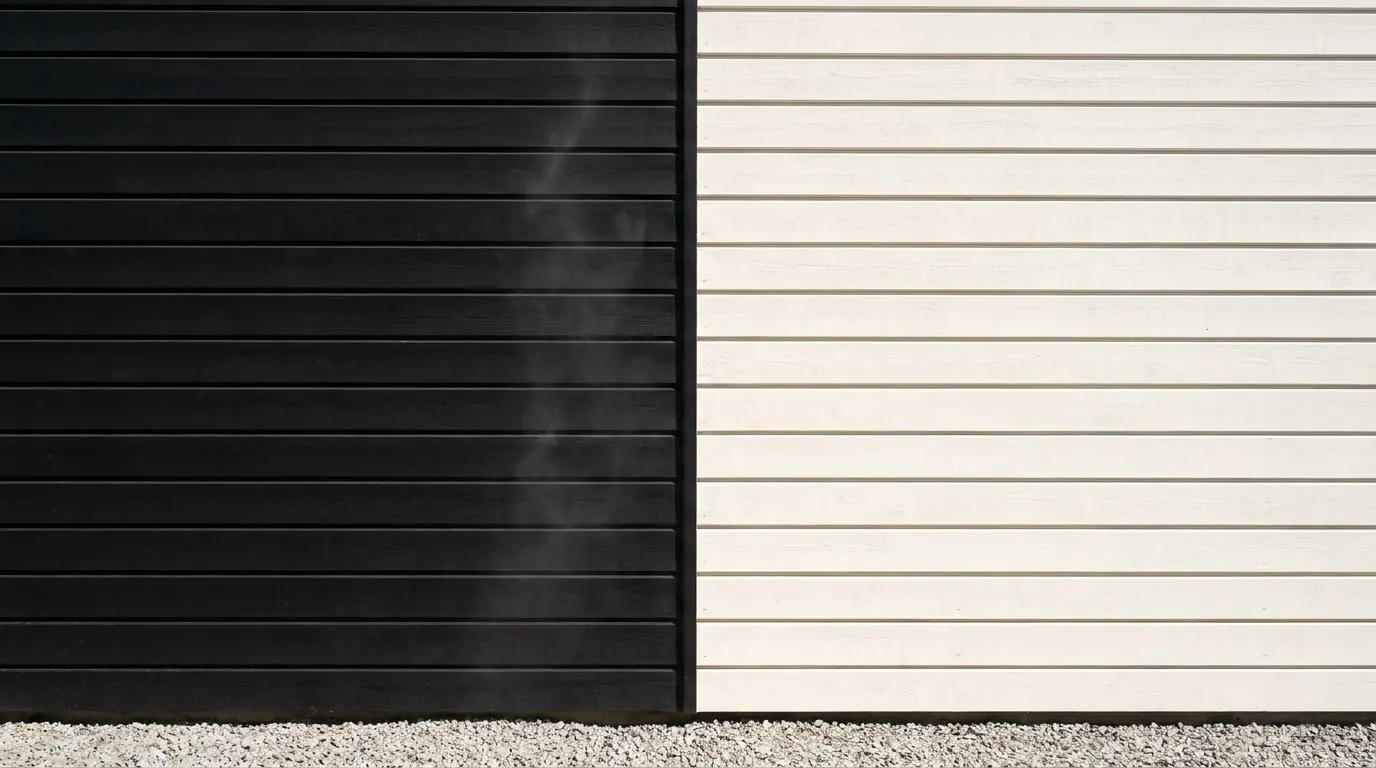
Everyone asks this first, so let's kill it first. The physics are dramatic: dark exteriors absorb up to 90% of the sun's energy, pure black has a Light Reflectance Value of 0, and a black wall in direct sun can run up to 54°F hotter than a white one. On a 90°F day, that surface can be too hot to touch.
Scary, right? Now here's the part the panic posts leave out: that's the surface, not your living room.
What actually reaches the inside depends almost entirely on your insulation. Energy auditors who model this keep landing in the same place: on a well-insulated house, going from white to dark adds roughly 5% to the cooling load. One Texas auditor — fifteen years, tens of thousands of audits — said he'd never once told a client to repaint lighter to save energy. The realistic penalty range is 5–20%, and where you land in it is decided by your wall assembly, not your paint chip.
Two levers tilt the game in your favour:
- Cool-pigment blacks. About 45% of solar energy arrives as near-infrared light you can't see. Cool-pigment paints reflect much of it while still looking properly black. Same look, meaningfully less heat.
- Insulation and a ventilated rain-screen. Build the wall right and the surface temperature becomes an outdoor problem.
Rule of thumb: if your insulation is good, paint whatever colour you love. If your insulation is bad, the paint colour is the least of your problems.
Will it fade? Depends what you buy
Two things are true at once, and people constantly mix them up.
True thing one: darker pigments absorb more UV, so as a category, dark colours fade faster — Benjamin Moore says so themselves.
True thing two: black is not one pigment. Quality blacks built on stable pigments — think RAL 9005 or anthracite 7024 — consistently test among the most UV-stable exterior colours, ahead of plenty of brights. The stuff that dies fast is bargain black, and it doesn't fade so much as chalk: the binder breaks down and the surface dulls to a hazy grey.
So the fade question is really a shopping question:
- Buy a premium 100% acrylic exterior paint rated for UV stability. This is not the place for the bargain shelf.
- Expect to repaint sun-blasted south and west walls every 5–8 years. Shaded walls go much longer.
- Know that black hides dirt and mildew instead of showing it — which sounds great until you realise you've lost the early-warning system. Wash the house once a year, dirty-looking or not.
The material decides everything — pick from these four
"Black house" isn't one product. The cladding you choose sets your cost, your lifespan, your maintenance schedule and how the whole thing handles heat. Four serious options, one hard no.
1. Painted fiber cement — the value pick
Dimensionally stable (a 10-foot plank moves less than 3/32" across a 100°F swing), takes dark colours without complaint, and architects spec black fiber-cement panels routinely. Around $6–$15 per square foot installed, 30–50 year lifespan. Trade-off: you're on the repaint cycle. If I had a normal budget and wanted a black house, this is where I'd start.
2. Shou Sugi Ban — the forever option
The Japanese charred-wood technique that started half this trend. The charring itself seals the wood against rot, insects and even fire — and it's naturally, permanently black, no paint involved. It costs like the premium option it is ($13–$27 per square foot, roughly $22,000 on an average home) but properly maintained it lasts 80–100 years. Maintenance is a rinse and re-oil every few years. Expensive to buy, almost free to own.
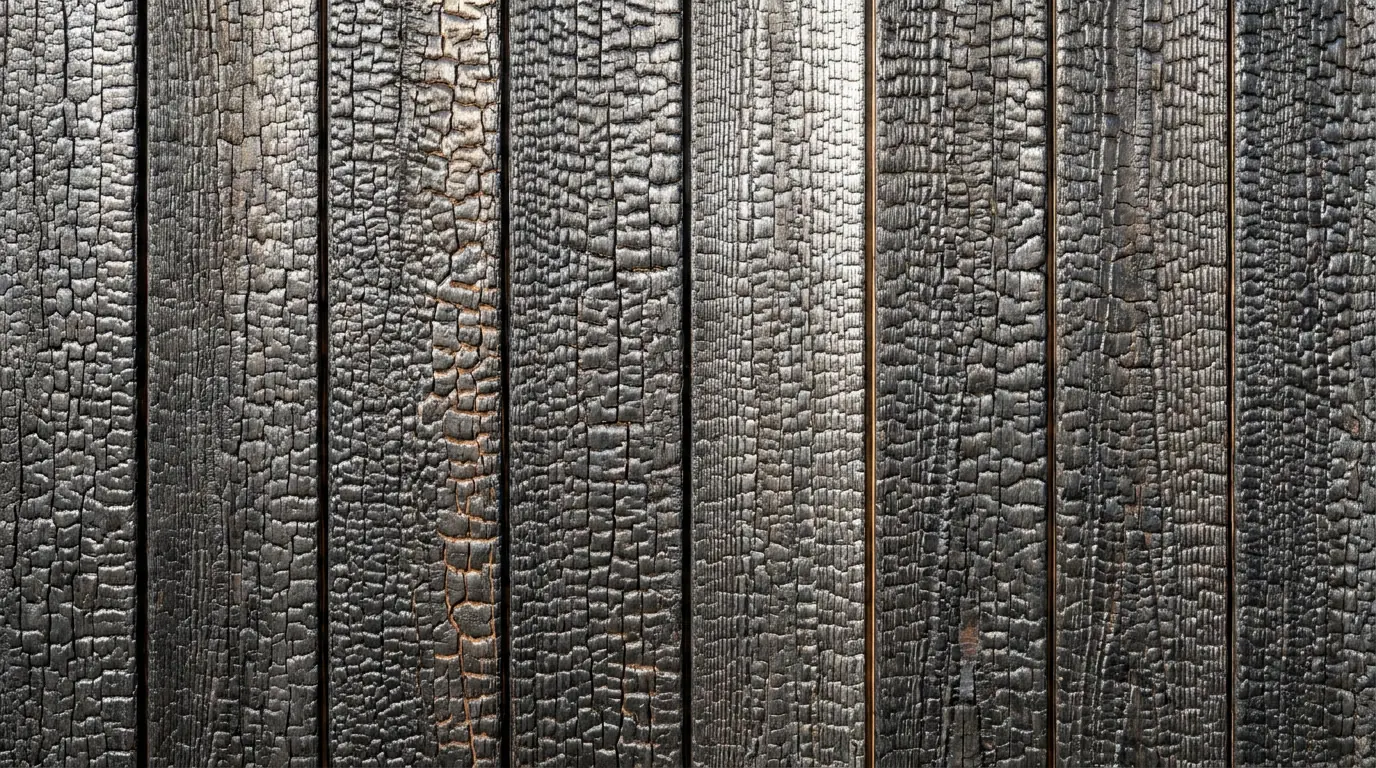
3. Dark-coated metal — the low-maintenance modernist
Standing seam in matte black is about as "architect" as it gets, and the practical case is just as strong: $10–$16 per square foot, 40–60+ years, fire-resistant, and maintenance that amounts to an occasional wash. One non-negotiable: insist on a PVDF finish — it holds colour dramatically longer than the cheaper SMP coatings. Metal conducts heat, so it wants a ventilated rain-screen behind it.
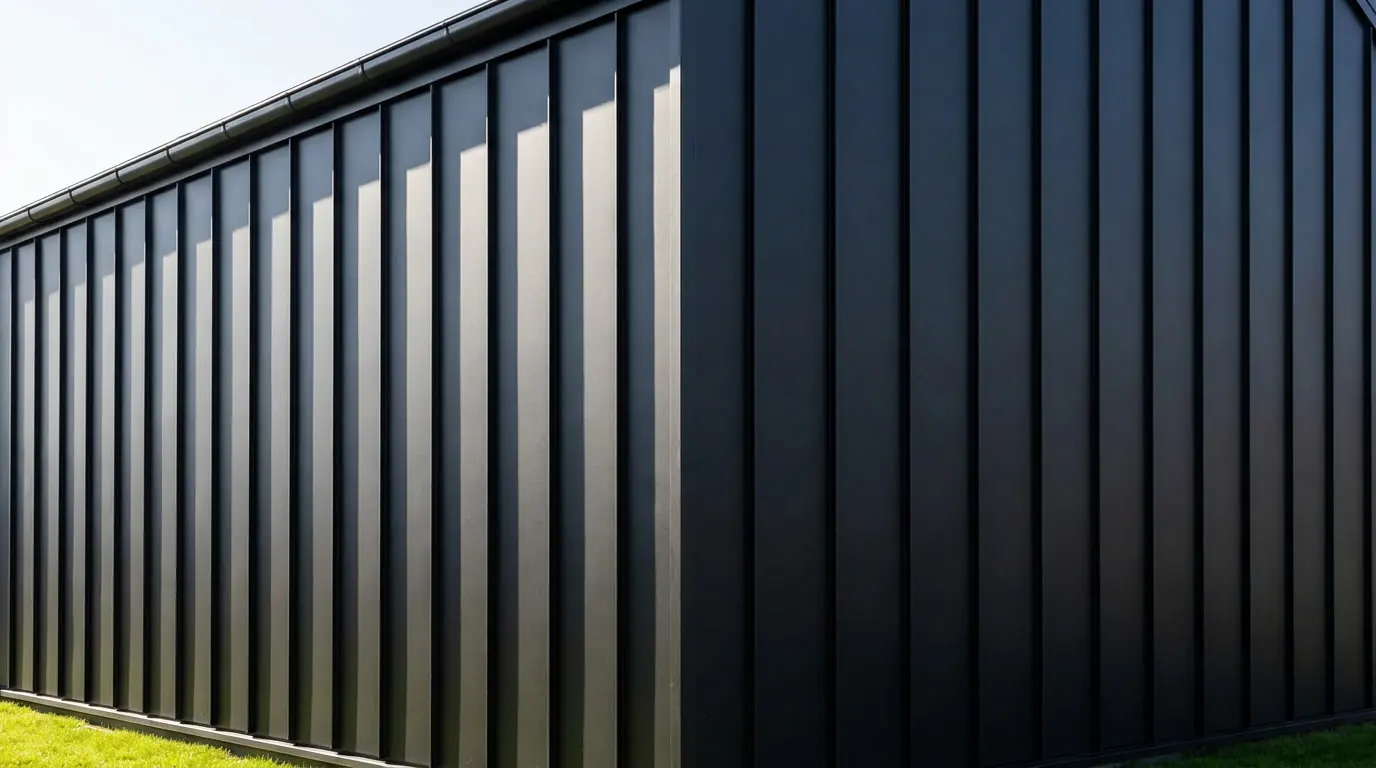
4. Painted wood — the classic with homework
Beautiful, traditional, and the neediest of the four: $5–$12 per square foot before paint, repaints every 5–8 years, and more sensitivity to intense UV. Fine in mild climates if you accept the upkeep as part of the deal.
The hard no: black vinyl
Dark vinyl absorbs heat and then warps, buckles and goes wavy — especially on south and west walls. This is so well known that most vinyl manufacturers void the warranty below LRV 55, which true black (LRV ~0–5) fails spectacularly. Real black vinyl barely exists as a product for exactly this reason. If you want black and your quote says vinyl, change the material, not the colour. You cannot out-stubborn physics.
The comparison table
| Material | Installed cost/sq ft | Expected lifespan | Maintenance | Best climate fit |
|---|---|---|---|---|
| Painted fiber cement | $6–$15 | 30–50 years | Repaint every 5–10 yrs; wash yearly | Most climates; strong in hot and sunny |
| Painted wood siding | $5–$12 (paint extra) | 20–40+ years | Repaint every 5–8 yrs; more upkeep | Mild and temperate; watch intense UV |
| Shou Sugi Ban / yakisugi | $13–$27 | 80–100 years | Rinse and re-oil every few years | Wide range; excels where wood is traditional |
| Dark-coated metal (PVDF) | $10–$16 (standing seam) | 40–60+ years | Very low; occasional wash | Hot-sunny and cold-snowy; use a rain-screen |
| Vinyl (black or charcoal) | $2–$7 | 15–25 years, less if warped | High risk of warping | Avoid — LRV 55+ only |
Your climate already made half the decision
Hot and high-sun (Southwest, Deep South): the hardest case. Biggest surface temps, biggest cooling penalty, fastest UV wear. Doable — but only with cool pigments, heat-tolerant cladding and serious insulation. This is expert-mode black.
Temperate and mixed (Mid-Atlantic, Midwest, PNW): the comfortable middle. Good construction makes the heat penalty a rounding error, and a bit of shade forgives everything else. Green light.
Cold (Mountain West, Northeast, Canada): plot twist — black is an advantage here. The absorbed heat nudges your heating bill down, dark walls shed snow faster, and there's a reason Scandinavian farmhouses have been black for centuries. If you're in snow country, this look was practically made for you.
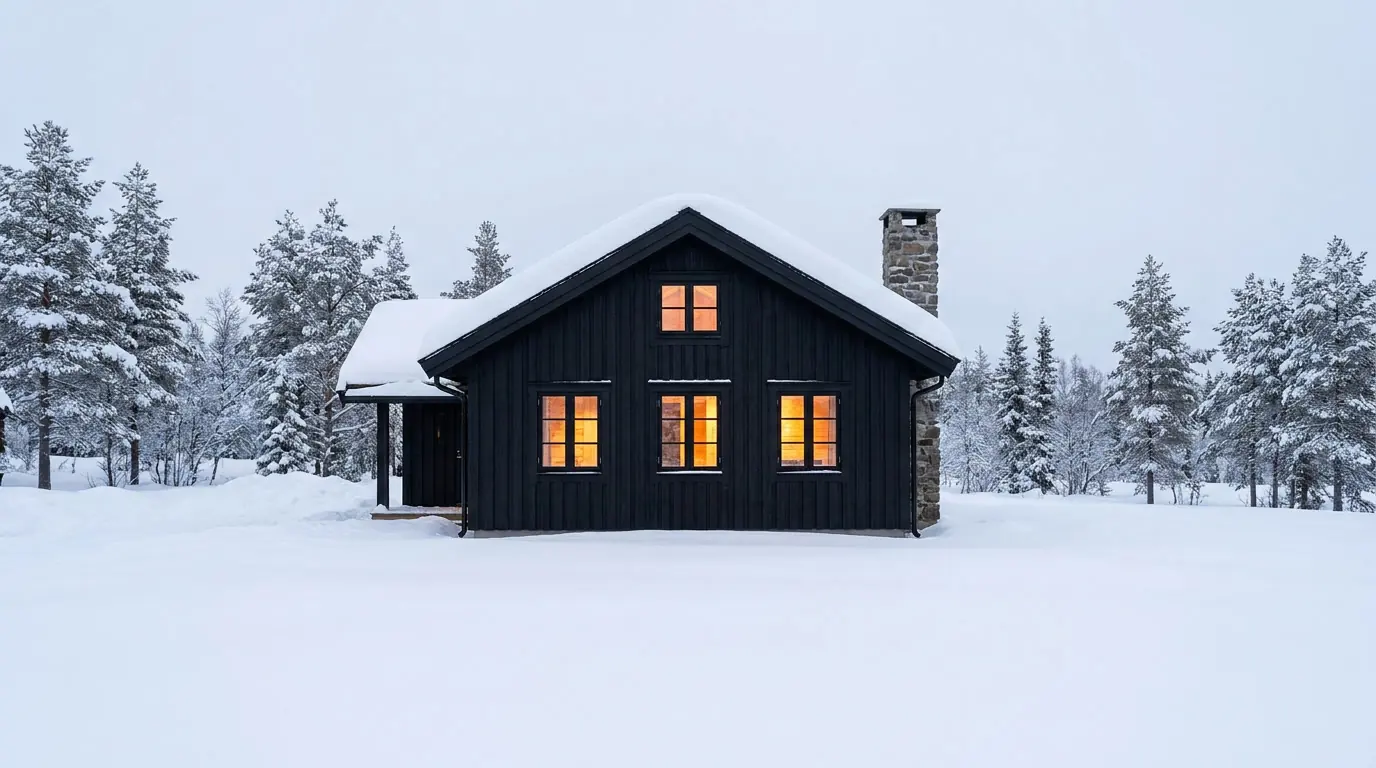
What does going black actually cost?
Here's a pleasant surprise: there is no "black premium." At the paint counter, black costs what every other colour costs. Your real cost decision is the cladding — fiber cement if you're value-minded, metal or charred wood if you're playing the long game. The only black-specific upcharge worth paying is a cool-pigment coating, and it pays you back in reduced heat and slower fade.
Resale: the $6,000 door and the unproven facade
You may have seen the headline that "black houses sell for more." Let's be precise about what was actually measured, because it matters.
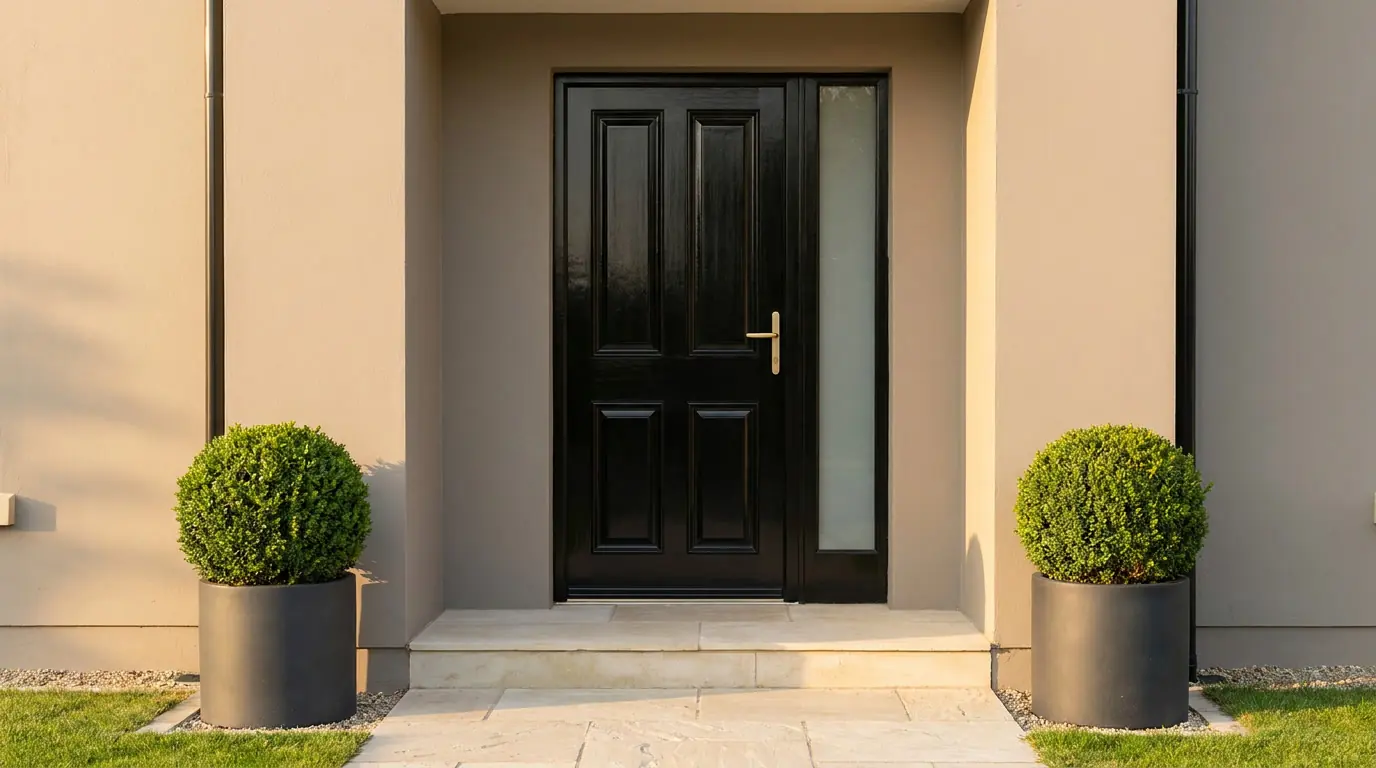
Zillow analysed ~135,000 sold-home photos and found homes with black or charcoal front doors sold for as much as $6,271 more than expected; a 2022 buyer survey put the door premium at $6,449. That's a door. Zillow has never measured an all-black facade — so nobody actually knows what full black does to your sale price.
What they did measure for whole exteriors points toward restraint: greige bodies sold for about $3,496 more, yellow ones about $3,408 less. The honest read: black accents are a proven value-add. A fully black facade is a taste-driven bet that depends on your market — treat it as resale-neutral at best, and paint it black because you love it, not because a listicle promised a premium.
One phone call before you buy a single can
If you live under an HOA, the colour might not be your decision. Most HOAs run an approved palette, require written architectural-review approval before you paint or re-clad, and specifically flag bold colours — deep black very much included. Some enforce LRV minimums (often 55+) and "no matching your neighbour" rules.
Paint first and ask later, and the HOA can force a repaint at your expense. That's a five-figure mistake you can avoid with one email to the board. Send the email.
The six mistakes people keep making
- Painting vinyl black. Warps, voids the warranty, looks bad within a season. Change materials.
- Panicking about interior heat. The surface gets hot; your living room follows your insulation. Fix the wall, not the colour.
- Skipping cool pigments. Nearly half the sun's energy is invisible near-infrared. Reflect it and keep the look.
- Buying cheap black paint. It chalks grey in a few years. Premium acrylic or don't bother.
- Skipping the annual wash. Black hides mildew until it's a real problem. Wash on schedule, not on sight.
- Surprising the HOA. Forced repaints are real. Get it in writing first.
Frequently asked questions
Do black houses actually get hotter inside?
The exterior surface gets dramatically hotter — up to 54°F hotter than white in direct sun. How much reaches the interior depends on insulation. In a well-insulated home the cooling penalty is often around 5%; in a poorly insulated one it's amplified. Cool-pigment black paints reduce the effect further.
Does black exterior paint fade quickly?
Cheap black tends to chalk and dull within a few years. High-quality blacks built on stable pigments are among the more UV-stable colours and hold up well. Expect a repaint on sun-facing walls roughly every 5–8 years, longer on shaded elevations.
What is the best material for a black house?
For durability and low maintenance, dark-coated metal with a PVDF finish or charred wood lead — both are long-lived and heat-tolerant. For value, painted fiber cement is the sweet spot. Avoid black vinyl, which warps.
Will an HOA let me paint my house black?
Often not without approval, and sometimes not at all. Many HOAs restrict bold colours, require architectural-review-board sign-off, and enforce LRV minimums. Check your CC&Rs and get written approval before painting.
Does a black exterior hurt resale value?
A black front door is a proven value-add — Zillow measured up to about $6,271 more. A fully black facade has never been directly measured and is a taste-driven, market-dependent choice, safest treated as resale-neutral. Black accents beat all-black for broad buyer appeal.
Thinking even smaller?
Everything here matters double on a compact build, where the facade is basically the whole architecture and every square-foot price lands harder. If that's your direction, start with what a tiny house actually costs — same honesty, applied to the budget.